Saturday, February 28, 2015

Review: Anna Dressed in Blood


Anna Dressed in Blood
Anna Dressed in Blood by Kendare Blake

My rating: 4 of 5 stars


I think the last good YA book I read was The Monstrumologist, and I'm still not sure if that one is indeed a YA book, since it was way too gory for a typical teenager to like it and it was far too philosophical for, again, a typical teenager to like it. Why am I saying this? Because Anna Dressed in Blood was awesome.

I like it that the romance is not a central point on the story. Sure, it made me roll my eyes, but it was completely in the background. The story was there and it never fed on the romance to work out. And it was great that it was not a stupid insta-love, because trust me: If it had been an insta-love, I wouldn't have rated this book with 4.5 stars.

I didn't quite find this book scary as I thought it would be. The first 30% on the book was scary as hell, but then, the other part of the book was merely suspense, but well, I did give me very creepy surprises at many moments. And it was very very gory at times (and with a very beautiful writing).

Cas was a great narrator. He was brave, kick-ass, and also funny. What else could I ask from a narrator? Besides, he was a boy. In most YA novels, the narrator is a clumsy, mary-sue girl; I needed a change. You know, maybe this is a coincidence, but the last good YA novel I read, that is, The Monstrumologist, had a boy-narrator too, which I also loved, by the way.

But as much as I loved Cas, I don't think he was the best character in the book. The best one was the goddess of nightmares: Anna. Anna Korlov. Anna dressed in blood.

Cas had been accustomed to killing ghosts, but Anna is different. She has a God-all-mighty strength, she's intelligent and she knows she's dead. Her past and the way she died are both horrible, and something unknown gives her that supernatural strength. I felt really bad for her when I got to know how (and by whom) she was murdered.

Also, this is not a novel with a single plot. There were two big issues to solve in it. The first one is the obvious one: The hunt for Anna; and the second one is not that obvious. When you get to the 45% of the book, you can have a guess about what it was. I guessed it halfway through the book.

What a creepy beast! At first, it reminded me of the Anthropophagi because it ate human flesh, but then, when they told that it actually was an Obeahman, I felt more scared. You see, precisely this semester at the university, I (and my group) was assigned to investigate about african-caribbean alternative religions, and within them were Voodoo, Obeah, Revival and Pocomiah, so I knew something about it. Yikes.

Anyway, Anna Dressed in Blood was a pleasant surprise. I loved it and I will certainly read the sequel, Girl of Nightmares. Luckily enough, I'll enjoy it as much as I enjoyed this one.

Read it, please. You will not be disappointed.


View all my reviews

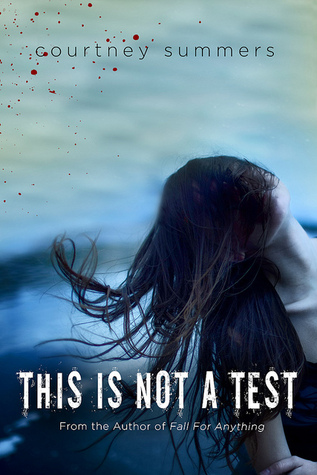
Review: This Is Not a Test


This Is Not a Test by Courtney Summers

My rating: 5 of 5 stars


This book blew my mind. And it made me feel empty.

This is the apocalypse and six teenagers manage to survive the zombie plague that seems to be overcoming the world. They barricade themselves in their high school while trying to figure out how stay alive. However, not all of those six teenagers are grateful of being alive. There's Sloane Price, a girl who has had her own apocalypse not long since and cannot wait for the dead to feed on her.

When I started this book, I thought it was going to be a slaughter of humans and zombies...but it was not. And don't get me wrong, I'm not disappointed. If anything, I only liked it better. This is a story about survival. But then again, it is not only about surviving from the zombies. They also have to survive to themselves.

You would think that after they manage to secure the school, everything is perfect and the only thing that is left for them to do is to finding out how to kill all the zombies and get back to their normal lives, nonetheless, you wouldn't even think about the conflicts existing between the characters, because, you know, we live in a perfectly harmonious world in which everyone agrees with everyone. But that is not the case in this book.

We get to see how complicated it really is to survive...and that surviving does not only mean to be alive. What does it matter that you're alive if you have nothing left for you to want to live? That is a question analyzed in this book. And that is the inner conflict Sloane is trying to get through. She fights to find the answer to that question...and she fights for her to find her own reason to survive, because that's what everyone seems to be trying to do.

The set of character in this book is one of the most interesting and realistic I have read about. First, we have Sloane, the narrator, which I said to be a conflicted girl with no reason to live. Her life was already torn apart when the zombies came, so this apocalypse really didn't worsened anything. I could understand her and I felt bad for her. Sometimes, I have to confess, I feel just like she did, so I could sympathize with her. The other teenagers trapped with her have also their struggles and their own reasons to live, and her discovering those reasons made me feel very sad, too.

I loved the writing. It was stunning. And sad. The writing is impregnated with a sad tone throughout the story. But it was a great writing. Everything felt so vivid I could almost say I was with them. If a book has a slightly boring plot but has an amazing writing, I would be glued to it just because of the writing. This book kept me glued all the time, both because of the writing and what has happening.

This book was beautiful, raw, depressing and soul-crushing. And I loved it. I hope it doesn't tell bad things from me the fact that my favorite books are the soul-destroying type of books, but that's the truth and I can't deny it. This book ripped me and builded me again. I don't think a book had done this to me since I finished The Final Descent, which was also pessimistic in tone and everything. A point in your favor, Ms. Summers.

This was my first Courtney Summers' book, and after readingThis Is Not a Test I can say for sure that I will continue reading her books. I hope she doesn't disappoint me and that all of her books are as good or better than this one. I'll be craving for your books, Ms. Summers, did you hear that?

Please read this, you will not regret it. And remember, this is not a test, though this book certainly felt like a test to my mind...

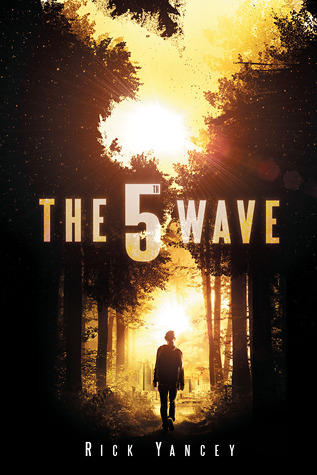
Review: The 5th Wave


The 5th Wave by Rick Yancey


My rating:


In some way, I thank myself for reading this, otherwise, I wouldn't have read my favorite series (not joking), The Monstrumologist.

The 5th Wave is a really good book that you wouldn't regret reading it in any way, but it is not the best book by Rick Yancey, in my opinion. Yes, the writing is amazing, the character development is done really good, the plot, while not original, is developed in the way it makes it sound amusing; but I still don't think it's the best thing ever. My favorite work by Mr. Yancey isThe Monstrumologist. Nothing will ever replace that series from the special place in my heart (and if you knew me, you would know that I don't usually say those kind of things).

Cassie's a survivor of 4 waves of alien attacks. She's just been separated from her family, and now she's on a task of rescuing her little brother. Everything is fine until she's wounded by someone, and when she wakes, she's with a mysterious guy who may or may not be one of the aliens passing for a human.

On the other hand, we have Zombie (it's a nickname, people), who's being trained with other teenagers and kids for the army to fight the aliens. He doesn't trust people easily, and at some point he starts to doubt if indeed the people with who he shares his time are people he can trust, or if they are just liars.

As I said, the writing is really good. Sometimes, although the writing was simple, it was difficult for me to follow what was happening because it suddenly changed POVs without a warning. After a while , I got accustomed, but in first place I was confused. This is not a complaint, just something I thought worth to mention.

I kinda liked Cassie. She's not the Mary Sue kind of girl. She's strong, sarcastic and has learned to survive in the hard way. Her family was ripped from her in a most terrible way and she doesn't trust people easily, not even the hot guy that rescued her. Well, at least when they first met. *rolls eyes*

I didn't like Evan Walker. Don't judge me prematurely for saying that, but I simply didn't like him. He's too predictable for my taste (I knew he was an alien right from the beginning. Mr. Yancey doesn't make a big effort in trying to hide this.).


As for Zombie... I did like him. Protective, strong and somewhat funny. Zombie catched my attention since he mentioned where he was and what he was doing. The storyline in which he was the protagonist was the most interesting, in my opinion. The other characters were likable too, with Ringer being my favorite. She reminded me of Rita, from Edge of Tomorrow (if you haven't watched that movie, look for it, I'm not going to describe her). What a kickass female.

The plot twists were not unexpected, but they were done in a good way, so I didn't care. Also, the ending is a damned cliff-hanger, and that left me wanting to read more.

Nonetheless, this was not a perfect book. There were some parts that I really liked (the beginning, for example), but there were many other things that bothered the hell out of me. One of them was the romance. I felt it was forced and too insta-lovey. Evan was a too cliched love interest, and up to the point when Cassie and he met, she was more likable. After that, it got too cheesy for my taste. It surprises me that Rick Yancey would write something like that.

Also, I don't think I fully bought the fact that Cassie's father let Sammy go just like that. I mean, (and I think I read something similar to this in another review) they were still an almost complete family, so why did he do that? The rule after the 4th wave was never to trust anyone, wasn't it? So why did he have to trust that people for taking care of his 5-year-old son?

But even when all those things annoyed me, I still think this is a good book. It's better than most YA out there. It's not the best thing I've read, but it was enjoyable all the same. I know I've said this like a billion times now, but Rick Yancey at his best is inThe Monstrumologist. However, don't commit the mistake of not reading anything by Mr. Yancey because he truly is a great writer. If you don't think you'd like this, you can read The Monstrumologist, which is perfect much better in every sense.

So, I recommend this to everyone. If you don't read it for enjoyment, at least do it for the message the book leaves, which I rather liked. You will undoubtedly enjoy it.

P.S.: I get bored with aliens, but I was intrigued by these ones. Great job, Mr. Yancey!


Review: The Final Descent


The Final Descent by Rick Yancey


My rating:


Once upon a time, there was a little boy who lost his parents in a fire. The boy had no one else in his life after this tragedy. Luckily (or unfortunately), the boy's dad was assistant to a great man called Pellinore Warthrop. This Warthrop—better known as “the doctor”, or “the monstrumologist”—decided that it was a good idea to take the orphan boy as his new assistant as a tribute to his former (and now dead) assistant, without knowing that the boy was doomed the moment Warthrop “adopted” him.

After many years of monster hunting (whether it be man-eating creatures, or wicked people), the boy was not anymore innocent. His soul had blackened, and the monsters he and the doctor hunted had gotten inside his skin and had turned to be part of him. Now, he's an old man whose dark past is such a great burden to him that he cannot resist it for any longer. Thus, he wrote some journals in which he explained his life from the moment he was cursed until the moment he became the man with the past too dark to bear.

Some people say this book was a disappointment, but I don't think so. They say it maybe because the end didn't please them, but for me, it was the best-fitting finale. What can you expect from a book about monsters "written" by a man that was exposed to them since his childhood? Would you really think he would be sane (or at least not perturbed)? Can you expect a happily ever after at the end? In my opinion, the ending is just as it should have been. It is certainly the most probable thing to happen if the things narrated had actually taken place at some time.

The writing is just as marvelous as in the previous books, if not better: It is dark, poetic, powerful and beautiful. I could almost say that the color black is not even dark enough to describe how somber the writing (and the book in general) is. Oh, and did I mention that it is also filled with a lot of philosophy? Well, if I hadn't, now I have.

There were many frightening scenes, although they are not like the ones in the previous books, that is, they're not necessarily gory. Don't expect this book to be like the preceding installments, because it is not. Rick Yancey said in the acknowledgements: 

“The Monstrumologist was conceived as one thing and evolved into something quite different. (...) Man-eating monsters running amok is a simple enough concept, the impenetrable dark in us, not so much.”

And he's not fooling you. The Monstrumologist was originally about Will and Warthrop's adventures defeating monsters, nonetheless, with each book that passed, the way the series lead started to turn to another path, a darker one, that resembled more an exploration on humanity:

“It occurred to me, (...) that aberrance is a wholly human construct. There were no such things as monsters outside the human mind. We are vain and arrogant, evolution's highest achievement and most dismal failure, prisoners of our self-awareness and the illusion that we stand in the center, that there is us and then there is everything else but us. But we do not stand apart from or above or in the middle of anything. There is nothing apart, nothing above, and the middle is everywhere—and nowhere. We are no more beautiful and essential or magnificent than an earthworm. In fact (...) you could say the worm is more beautiful, because it is innocent and we are not. (...), and so who are the monsters and which species shall we call aberrant?”

In this final installment, we get to see more development in the character of Will Henry. There are two of them. One, a sixteen-year-old teenager who's trying to fight the demons inside him and is still under the monstrumologist's service; and a mature Will Henry that has just come back to Warthrop after a long period of being away from him. Each one is different: The first one is troubled and resembles Jack Kearns a lot, and the last one has already his eyes completely open to the cruel reality of the world.

This book broke me. It's not a book that manipulates your feelings—don't get me wrong. It's just that you come to love everything about this series so much, you love the characters as if they were part of yourself and you think there's still hope for everyone that when everything ends, it does it in a way that makes you feel as if you've been... betrayed, and after everything, you feel dead inside. But that's good, because I think that was Mr. Yancey's intention: That you never forget about the series and that you let it live inside you.

You're going to feel angry (specially at Will Henry), sad, betrayed and empty—all at the same time. You're going to be left with more questions than answers, but again, that was fine for me. Now the ghost of this series is living inside me, haunting me, pursuing me, without letting me alone—not even for a day.

And finally, I really hope this series wins popularity one day, because I feel I'm the only person on Earth that has read it. As I said on a previous review, people don't know what they are missing with not reading this series. To tell you something else, this series is part of the slim list of books that changed my way of seeing things in life, and I'm not joking about this. It's like these books are my new glasses without which I only see blurred shadows and lights.

Snap to, readers! Give a chance to this series, let the shadow live within you too. You will not regret reading it.

“Yes, my dear child, monsters are real.”

P.S.: If the series itself didn't broke my heart, then this broke it. I knew about this conflict (and thinking about it depresses me), but I read this post until now. It makes me feel so sad to see that this masterpiece had its life threatened. It's a good thing, though, that even when this series is only appreciated by a very small group of people, we fierce in our love for it.


Friday, February 27, 2015

Review: The Isle of Blood


The Isle of Blood by Rick Yancey


My rating:

The Monstrumologist series is one of those few that quickly became one of my favorites, and The Isle of Blood is, in my opinion, the best book in the series. I cannot put into words how truly amazing this book was, so if you find my review difficult to understand, it might be because of my confused feelings.

Mr. Yancey outstanded himself with this book. I thought the series couldn't get any better, but then Yancey comes up with The Isle of Blood and surprises me. The word "perfect" is not even enough to describe this book. Very few authors can do that. I don't even remember examples of any book that can be listed in that case.

In this case, Dr. Warthrop is sent a nidus that is supposed to be made by the Holy Grail of Monstrumology--the magnificum. No one has seen one--neither dead nor alive--, so this arouses Warthrop's curiosity and he goes to hunt this creature.

However, this book is not only about this. This book is also about being human, what makes us human, what differentiates us from monsters. This installment, as well as the previous ones, explores the lines between monster/human and good/evil, but it does it in a much more profound way.

I love the writing style. I know I've said this like a million times, but I really love it. It's so poetical, so dark, so beautiful. It fits the time in which the diaries were written. Also, it makes you feel closer to the characters.

But, of course, this series wasn't written to please the majority of the YA audience. My main reason to say that is because it has no romance, it is very philosophical and it is slightly hard to understand what the author means. Also, because of the content of the book, it can be classified as a book meant for adults (excessive violence and gore). However, the protagonist is a boy, and that would mean it is either a children's book or a YA's book, and it is obviously the latter.

The characters are amazing. You can see how they develop throughout the series. Will Henry is not anymore the innocent boy we met in The Monstrumologist. He has grown up and is more independent; also, I really love his loyalty towards Warthrop, I don't think someone could be more loyal to someone than him. There's something that puzzles me about him, and that is that he claims to hate Warthrop, yet he's more faithful than a dog to him. Part of it it's because he's the only one he has, but what of the other aspects to consider?

We get to see some more of Warthrop's weakest side, meaning, we see him a little more human: He shows Will Henry that he cares for him, and sometimes, we see him fighting to keep his humanity.

“Please, do not leave me, Will Henry. I would not survive it. You were nearly right. What Mr. Kendall was, I am always on the brink of becoming. And you - I do not pretend to know how or even why - but you pull me back from the precipice. You are the one... You are the one thing that keeps me Human.”


Also, I love how Mr. Yancey says human beings are just a depraved species that the only thing they do--I mean, we do--is to fight one another, and that there are no monsters, only men:

“What of men? I can't think of anything more banal. I have no doubt — no doubt whatsoever — that once it has obtained the means to do so, the species will wipe itself off the face of the earth. There is no mystery to it; it is our nature. Oh, one might delve into the particulars, but really, what can we say about the species that invented murder? What can we say?”


While the previous installments focused more in the hunt for monster, this one was more about the search for the monster inside us than the hunting for aberrant creatures.

“You are the nest. You are the hatchling. You are the chrysalis. You are the progeny. You are the rot that falls from stars. You may not understand what I mean.

You will.”


And certainly you will understand it. At that time I didn't, but in the end, you will, and it will blow your mind. Or at least my mind because I totally didn't see it coming. I honestly expected something else, but I liked better what I got - it's more powerful.

I don't get why people don't appreciate the great literary master piece that is this series. As I already said, I find it difficult to put into words how fantastic this book was, but I hope people realize what they are missing with not reading this series, because they are the best work ever made in the YA gender (or not necessarilly YA because by now I'm not even sure if this series' directed audience are indeed YA readers).

Anyway, I really loved this book and the series. I recommend it to everyone. It is worth all your time. And please, read it. After all this time, I still feel I'm the sole person on Earth who has read this. I feel like my head is going to explode if I don't talk to anyone about this.

"We are hunters all. We are, all of us, monstrumologists."


View all my reviews

Review: Gone


Gone

Gone by Michael Grant

My rating: 1 of 5 stars


DNF at 10%


And I failed. Again.

I've tried twice to read this book, but both times I haven't managed to do it. It's just simply not for me. The concept is interesting, really, but I'm not intrigued by it anymore.

When I read what this was about, I was really excited, I remember, but that excitement faded away quickly with time, until one day I could no longer remember that I had been planning to read this.

That's when some reviews about this book started to appear.

If you were wondering if this was what aroused my curiosity for a second time, then you're right: When positive reviews about this book (series) started to pop out, I felt again that thrill, and I decided to give it a try. But I couldn't get past page ten.

Page ten, my dear friends. I couldn't get past page ten!! I found it boring, and all my curiosity had already died by that point. So that was a did-not-finish for me.

But again, some time later (like a year after), another wave of positive reviews started to appear, and again, my curiosity was awakened. And to make a long story short, I tried to give it a second chance and read it... but I failed again.

I found it more boring than the first time, just now I was not only bored but annoyed by the main characters. They all felt unrealistic and dull. Sorry if you don't agree with me, but I just didn't like any single of them.

At some point, things started to get better, however, by that point, I no longer wanted to read the book and I found myself skimming. This was when I made my final decision to leave this book unfinished.

No more tries for this one. Sorry, not sorry. Maybe it'll do for you, but for me, it didn't.


View all my reviews

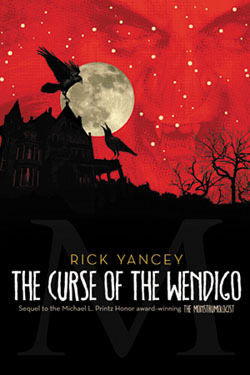
Review: The Curse of the Wendigo


The Curse of the Wendigo by Rick Yancey


My rating:


WARNING: Ridiculously long review ahead.

I've always thought that you don't fully appreciate a book until the second time you read it. This was the main reason why I decided to read again this series. I mean, I wanted to read it because I missed all the characters so much (please, don't roll your eyes), because I am in love so much with this series that being away from it caused my heart to feel sore (again, don't roll your eyes), but I also had this feeling that I left something behind, that I had not fully swallowed Mr. Yancey's intention with writing it. I don't think I left anything behind, but I certainly love more earnestly this series.

In this case, Dr. Warthrop is informed a beloved friend of his had disappeared. This friend –Dr. Chanler– went into the woods to find a lepto lurconis, aka the Wendigo, a creature that starves even as it gorges. Dr. Warthrop's decision is to find his friend, but he didn't expect to find what he did in his little trip to Canada.

The atmosphere is just as dark as the one in The Monstrumologist, and I loved that. I have to admit that I love dark books. Gothic books, horror books, existentialist books, etc. –and this one (or the series in general) falls into the three categories.

While this one was not as action-packed as the first installment, I still enjoyed it. In this book, Mr. Yancey takes more time into developing his characters and their relationships with other characters. I mean, The Monstrumologist focused mainly in the hunt for the Anthropophagi while also printing some colorful thoughts about humanity. The characters in that book were scarce –Will and Warthrop were the only that deserved time to give some background– and so, there was no need to give much space to character development.

However, in this book, there are so many new characters introduced that they need development. For example, Abram von Helrung, who is Dr. Warthrop's mentor; or Dr. Chanler, Dr. Warthrop's childhood friend; or Muriel Chanler, the one who gives Warthrop the notice that his friend disappeared and Warthrop's ex-fiancée (I'm not joking, he was engaged once).

Warthrop is no more presented as an automaton. While he and Will were in the woods, we can clearly see he's just as weak as any other human being: He can be afraid, and we know that, for him, fear is our worst enemy. We also see that Warthrop is capable of loving, and that he sometimes feels alone (which is kind of ironic, since he spends most of his time by himself), and that made me love him even more than how I loved him in the first book. He broke my heart.

Here, Warthrop's skills are put at their wits end. As I said, they had to deal with a “Wendigo”. You should not be surprised to know that, even when many mythological creatures exist in the book's world, there are certain specimens that are considered anything but product of superstition –the Wendigo is one of them. And so, when Warthrop is told that his friend “went wendigo”, he, at first, laughs, but then, he panics. It is never clear if his friend was indeed a Wendigo, or if his actions were merely the actions of a mad man overtaken by hatred and depression, but still, Warthrop was desperate, and that is something rarely seen.

And in this book, I think, is where Will Henry's slow corruption starts. After being through so much with the monstrumologist, after being so much time around monsters, surely you become one of those, don't you think? He's still the innocent twelve-year-old we met in the first installment, though a bit different. He feels guilt for what he does, but he is not the same boy. He has changed, for good or bad. I'll leave the rest for you to find out.

Surely there are scary moments –mostly when they are on the hunt for the unproven Wendigo. And there are also moments that make you question moral. It is present, as well as in the previous and next books, the good/evil, monster/human, science/superstition battles, which make the story more interesting. This book, along with the first one, is preparing us for the next one. Yes, I know this is a little redundant, but it's true. They cannot be read as stand-alone books, even when the plots are not connected with each other, because in each book, there are some clues given as to what Will Henry will become and how he got to be what he is now, as an old man writing the things that haunt him everyday.

[Show spoiler]

Have I said something about the writing? I think that in my review about The Monstrumologist, I put clear that I loved it. Are there words for me to say how beautiful and astonishing it was in this book? No, but I'll try. And before I tell you what I thought, please read the following quote:

”His entire chest cavity had been opened up. Ice crystals glittered like jewels festooning his ribs, lining the walls of his ripped-open stomach; his lungs looked like two enormous multifaceted diamonds; his frozen viscera shone as brightly as wet marble. It was terrible. And it was beautiful.”


It's like a poem, don't you think?

The writing in this book is similar to the one in the first installment in what it concerns to the dark atmosphere and the gore. The scenes are described with full-detail of what happened (just look again at that quote), without skipping blood and gore, and everything seems very gothic and dark. But it is also given a poetic touch, which, again makes me question, how can something be so terrible yet so beautiful? I don't know how Mr. Yancey does, but instead of making me want to vomit, I stare fascinated at the lines I read, even (or specially) if they are like the ones I transcribed. And now, look at this one:

"In the outer room their shadows meet and become one. The starving man eats; he drinks his fill from the pure waters overflowing. Her sweet breath. Her skin golden in the firelight. For a moment, at least, he tastes what his enigmatic mistress, the one for whom he rejected this love, cannot provide. In the abundance of her emerald eyes, Pellinore Warthrop found himself in another human being at last."


That one is so beautiful I almost cried at how stunningly marvelous it was. Maybe I am not making sense, but that is how I feel about this book. I know I have said this like a thousand times, but I absolutely love Rick Yancey's writing. In all the books I've read by him, the writing is by far what he does better. Oh, God, I'm fangirling again over him. If I ever meet him, I don't know what I would do. Perhaps I will faint, but I know I would be very happy if I ever meet Mr. Yancey. He's a genius, plain and simple (and I'm perfectly aware I'm fangirling, again).

In my review about The Monstrumologist I also said that one of the things I loved the most was the Will/Warthrop relationship. They are like father and son. Warthrop's ego might be too big to show feelings, but when he's at critical situations, he gets off that mask. Practically the entire book has him in a critical situation, so we can see his human side. We can see how he cares for Will, how he's worried that something bad can happen to him. He is still insulting to him sometimes, but the surprising thing is that he apologizes. Oh, how I love them!

And, as in the previous and next books, there are present many historical figures. Did you know Bram Stoker (the one and only) was the main cause why Dr. Chanler ran off to the woods to see if he could find a Wendigo (because finding one must lead to the existence of “the Irishman's pet project”, that is, the vampire)? Jack Fiddler is another important figure that appears; and there is an implication that Dr. Warthrop helped Thomas A. Edison design the phonograph. Algernon Blackwood also makes an appearance. My point is that you have to have some background concerning history and literature up to that date, because there are not only these references I've said about people, but there were also references to classical books (The Divine Comedy, Oedipus Rex, etc.). So, I'll give you a piece of advice: Every time there is a name mentioned (whether it be a person's name or a book title), look for it, because odds say it is a historical reference.

The battles between human vs. monster and science vs. superstition are more present in this book that in the previous installment. The first one is ever-present in the series. I think that is the rope that attaches all the series as one (“The line between what we are and what we pursue is razor thin. We will remember our humanity.”). As for the latter one, it is this book's connecting thread. I said they have to battle against a supposedly superstitious creature, and that here is where Warthrop is at his most critical moment –because he, as a man of science, cannot allow such thoughts.

After finishing this book, I feel a terrible loneliness inside me. Not because I already know how everything ends (this is a re-read) but because evrything was very depressing. The entire book has a sad tone, and this sad tone will remain for the rest of the series. And what Mr. Yancey, as the editor, said in the epilogue only worsened my emptiness. I wish I could make you read this, so I could discuss ot with someone.

Okay then. It has happened again. I've written a Bible-lenght review about this book. But I had so many things to say –so many things I loved and needed to be discussed– that I went on and on, writing without stopping, which should surprise you, if you knew me. I think I have said that my greatest struggle is with writing. Most of the time, while trying to write a review or an essay, I am blocked. Most of the time, I had no idea what to write and I can spend hours without writing a single thing. This review took me hours to write, but I never stopped writing. I was continuously typing something, and my words seemed to have no end, but I'll work on that now that I've finished.

Read this book. Even when almost everyone knows about Rick Yancey's books, I am still surprised about the fact that barely no one has heard about this series, but I'm here to try to solve that problem. I'm here to recommend you this book (and therefore series) and to tell you it is the best I've read so far in my life (only my love for Demian can be compared with that of this one). Read it, please. Now I'm not only persuading you; now I'm begging you to read this series. If you know what it feels like when you have no one to fangirl with over a book (or author), then you understand me. I feel alone when I think about this series. So please, read it. It is completely wonderful and perfect. All I can ask from a book.


View all my reviews