Saturday, February 28, 2015

Review: The Final Descent


The Final Descent by Rick Yancey


My rating:


Once upon a time, there was a little boy who lost his parents in a fire. The boy had no one else in his life after this tragedy. Luckily (or unfortunately), the boy's dad was assistant to a great man called Pellinore Warthrop. This Warthrop—better known as “the doctor”, or “the monstrumologist”—decided that it was a good idea to take the orphan boy as his new assistant as a tribute to his former (and now dead) assistant, without knowing that the boy was doomed the moment Warthrop “adopted” him.

After many years of monster hunting (whether it be man-eating creatures, or wicked people), the boy was not anymore innocent. His soul had blackened, and the monsters he and the doctor hunted had gotten inside his skin and had turned to be part of him. Now, he's an old man whose dark past is such a great burden to him that he cannot resist it for any longer. Thus, he wrote some journals in which he explained his life from the moment he was cursed until the moment he became the man with the past too dark to bear.

Some people say this book was a disappointment, but I don't think so. They say it maybe because the end didn't please them, but for me, it was the best-fitting finale. What can you expect from a book about monsters "written" by a man that was exposed to them since his childhood? Would you really think he would be sane (or at least not perturbed)? Can you expect a happily ever after at the end? In my opinion, the ending is just as it should have been. It is certainly the most probable thing to happen if the things narrated had actually taken place at some time.

The writing is just as marvelous as in the previous books, if not better: It is dark, poetic, powerful and beautiful. I could almost say that the color black is not even dark enough to describe how somber the writing (and the book in general) is. Oh, and did I mention that it is also filled with a lot of philosophy? Well, if I hadn't, now I have.

There were many frightening scenes, although they are not like the ones in the previous books, that is, they're not necessarily gory. Don't expect this book to be like the preceding installments, because it is not. Rick Yancey said in the acknowledgements: 

The Monstrumologist was conceived as one thing and evolved into something quite different. (...) Man-eating monsters running amok is a simple enough concept, the impenetrable dark in us, not so much.”

And he's not fooling you. The Monstrumologist was originally about Will and Warthrop's adventures defeating monsters, nonetheless, with each book that passed, the way the series lead started to turn to another path, a darker one, that resembled more an exploration on humanity:

“It occurred to me, (...) that aberrance is a wholly human construct. There were no such things as monsters outside the human mind. We are vain and arrogant, evolution's highest achievement and most dismal failure, prisoners of our self-awareness and the illusion that we stand in the center, that there is us and then there is everything else but us. But we do not stand apart from or above or in the middle of anything. There is nothing apart, nothing above, and the middle is everywhere—and nowhere. We are no more beautiful and essential or magnificent than an earthworm. In fact (...) you could say the worm is more beautiful, because it is innocent and we are not. (...), and so who are the monsters and which species shall we call aberrant?”

In this final installment, we get to see more development in the character of Will Henry. There are two of them. One, a sixteen-year-old teenager who's trying to fight the demons inside him and is still under the monstrumologist's service; and a mature Will Henry that has just come back to Warthrop after a long period of being away from him. Each one is different: The first one is troubled and resembles Jack Kearns a lot, and the last one has already his eyes completely open to the cruel reality of the world.

This book broke me. It's not a book that manipulates your feelings—don't get me wrong. It's just that you come to love everything about this series so much, you love the characters as if they were part of yourself and you think there's still hope for everyone that when everything ends, it does it in a way that makes you feel as if you've been... betrayed, and after everything, you feel dead inside. But that's good, because I think that was Mr. Yancey's intention: That you never forget about the series and that you let it live inside you.

You're going to feel angry (specially at Will Henry), sad, betrayed and empty—all at the same time. You're going to be left with more questions than answers, but again, that was fine for me. Now the ghost of this series is living inside me, haunting me, pursuing me, without letting me alone—not even for a day.

And finally, I really hope this series wins popularity one day, because I feel I'm the only person on Earth that has read it. As I said on a previous review, people don't know what they are missing with not reading this series. To tell you something else, this series is part of the slim list of books that changed my way of seeing things in life, and I'm not joking about this. It's like these books are my new glasses without which I only see blurred shadows and lights.

Snap to, readers! Give a chance to this series, let the shadow live within you too. You will not regret reading it.

“Yes, my dear child, monsters are real.”

P.S.: If the series itself didn't broke my heart, then this broke it. I knew about this conflict (and thinking about it depresses me), but I read this post until now. It makes me feel so sad to see that this masterpiece had its life threatened. It's a good thing, though, that even when this series is only appreciated by a very small group of people, we fierce in our love for it.


Friday, February 27, 2015

Review: The Isle of Blood


The Isle of Blood by Rick Yancey


My rating:

The Monstrumologist series is one of those few that quickly became one of my favorites, and The Isle of Blood is, in my opinion, the best book in the series. I cannot put into words how truly amazing this book was, so if you find my review difficult to understand, it might be because of my confused feelings.

Mr. Yancey outstanded himself with this book. I thought the series couldn't get any better, but then Yancey comes up with The Isle of Blood and surprises me. The word "perfect" is not even enough to describe this book. Very few authors can do that. I don't even remember examples of any book that can be listed in that case.

In this case, Dr. Warthrop is sent a nidus that is supposed to be made by the Holy Grail of Monstrumology--the magnificum. No one has seen one--neither dead nor alive--, so this arouses Warthrop's curiosity and he goes to hunt this creature.

However, this book is not only about this. This book is also about being human, what makes us human, what differentiates us from monsters. This installment, as well as the previous ones, explores the lines between monster/human and good/evil, but it does it in a much more profound way.

I love the writing style. I know I've said this like a million times, but I really love it. It's so poetical, so dark, so beautiful. It fits the time in which the diaries were written. Also, it makes you feel closer to the characters.

But, of course, this series wasn't written to please the majority of the YA audience. My main reason to say that is because it has no romance, it is very philosophical and it is slightly hard to understand what the author means. Also, because of the content of the book, it can be classified as a book meant for adults (excessive violence and gore). However, the protagonist is a boy, and that would mean it is either a children's book or a YA's book, and it is obviously the latter.

The characters are amazing. You can see how they develop throughout the series. Will Henry is not anymore the innocent boy we met in The Monstrumologist. He has grown up and is more independent; also, I really love his loyalty towards Warthrop, I don't think someone could be more loyal to someone than him. There's something that puzzles me about him, and that is that he claims to hate Warthrop, yet he's more faithful than a dog to him. Part of it it's because he's the only one he has, but what of the other aspects to consider?

We get to see some more of Warthrop's weakest side, meaning, we see him a little more human: He shows Will Henry that he cares for him, and sometimes, we see him fighting to keep his humanity.

“Please, do not leave me, Will Henry. I would not survive it. You were nearly right. What Mr. Kendall was, I am always on the brink of becoming. And you - I do not pretend to know how or even why - but you pull me back from the precipice. You are the one... You are the one thing that keeps me Human.”


Also, I love how Mr. Yancey says human beings are just a depraved species that the only thing they do--I mean, we do--is to fight one another, and that there are no monsters, only men:

“What of men? I can't think of anything more banal. I have no doubt — no doubt whatsoever — that once it has obtained the means to do so, the species will wipe itself off the face of the earth. There is no mystery to it; it is our nature. Oh, one might delve into the particulars, but really, what can we say about the species that invented murder? What can we say?”


While the previous installments focused more in the hunt for monster, this one was more about the search for the monster inside us than the hunting for aberrant creatures.

“You are the nest. You are the hatchling. You are the chrysalis. You are the progeny. You are the rot that falls from stars. You may not understand what I mean.

You will.”


And certainly you will understand it. At that time I didn't, but in the end, you will, and it will blow your mind. Or at least my mind because I totally didn't see it coming. I honestly expected something else, but I liked better what I got - it's more powerful.

I don't get why people don't appreciate the great literary master piece that is this series. As I already said, I find it difficult to put into words how fantastic this book was, but I hope people realize what they are missing with not reading this series, because they are the best work ever made in the YA gender (or not necessarilly YA because by now I'm not even sure if this series' directed audience are indeed YA readers).

Anyway, I really loved this book and the series. I recommend it to everyone. It is worth all your time. And please, read it. After all this time, I still feel I'm the sole person on Earth who has read this. I feel like my head is going to explode if I don't talk to anyone about this.

"We are hunters all. We are, all of us, monstrumologists."


View all my reviews

Review: Gone


Gone

Gone by Michael Grant

My rating: 1 of 5 stars


DNF at 10%


And I failed. Again.

I've tried twice to read this book, but both times I haven't managed to do it. It's just simply not for me. The concept is interesting, really, but I'm not intrigued by it anymore.

When I read what this was about, I was really excited, I remember, but that excitement faded away quickly with time, until one day I could no longer remember that I had been planning to read this.

That's when some reviews about this book started to appear.

If you were wondering if this was what aroused my curiosity for a second time, then you're right: When positive reviews about this book (series) started to pop out, I felt again that thrill, and I decided to give it a try. But I couldn't get past page ten.

Page ten, my dear friends. I couldn't get past page ten!! I found it boring, and all my curiosity had already died by that point. So that was a did-not-finish for me.

But again, some time later (like a year after), another wave of positive reviews started to appear, and again, my curiosity was awakened. And to make a long story short, I tried to give it a second chance and read it... but I failed again.

I found it more boring than the first time, just now I was not only bored but annoyed by the main characters. They all felt unrealistic and dull. Sorry if you don't agree with me, but I just didn't like any single of them.

At some point, things started to get better, however, by that point, I no longer wanted to read the book and I found myself skimming. This was when I made my final decision to leave this book unfinished.

No more tries for this one. Sorry, not sorry. Maybe it'll do for you, but for me, it didn't.


View all my reviews

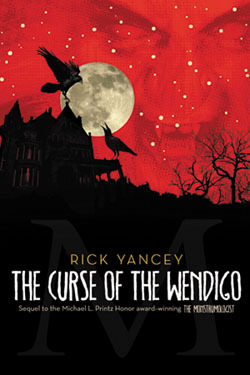
Review: The Curse of the Wendigo


The Curse of the Wendigo by Rick Yancey


My rating:


WARNING: Ridiculously long review ahead.

I've always thought that you don't fully appreciate a book until the second time you read it. This was the main reason why I decided to read again this series. I mean, I wanted to read it because I missed all the characters so much (please, don't roll your eyes), because I am in love so much with this series that being away from it caused my heart to feel sore (again, don't roll your eyes), but I also had this feeling that I left something behind, that I had not fully swallowed Mr. Yancey's intention with writing it. I don't think I left anything behind, but I certainly love more earnestly this series.

In this case, Dr. Warthrop is informed a beloved friend of his had disappeared. This friend –Dr. Chanler– went into the woods to find a lepto lurconis, aka the Wendigo, a creature that starves even as it gorges. Dr. Warthrop's decision is to find his friend, but he didn't expect to find what he did in his little trip to Canada.

The atmosphere is just as dark as the one in The Monstrumologist, and I loved that. I have to admit that I love dark books. Gothic books, horror books, existentialist books, etc. –and this one (or the series in general) falls into the three categories.

While this one was not as action-packed as the first installment, I still enjoyed it. In this book, Mr. Yancey takes more time into developing his characters and their relationships with other characters. I mean, The Monstrumologist focused mainly in the hunt for the Anthropophagi while also printing some colorful thoughts about humanity. The characters in that book were scarce –Will and Warthrop were the only that deserved time to give some background– and so, there was no need to give much space to character development.

However, in this book, there are so many new characters introduced that they need development. For example, Abram von Helrung, who is Dr. Warthrop's mentor; or Dr. Chanler, Dr. Warthrop's childhood friend; or Muriel Chanler, the one who gives Warthrop the notice that his friend disappeared and Warthrop's ex-fiancée (I'm not joking, he was engaged once).

Warthrop is no more presented as an automaton. While he and Will were in the woods, we can clearly see he's just as weak as any other human being: He can be afraid, and we know that, for him, fear is our worst enemy. We also see that Warthrop is capable of loving, and that he sometimes feels alone (which is kind of ironic, since he spends most of his time by himself), and that made me love him even more than how I loved him in the first book. He broke my heart.

Here, Warthrop's skills are put at their wits end. As I said, they had to deal with a “Wendigo”. You should not be surprised to know that, even when many mythological creatures exist in the book's world, there are certain specimens that are considered anything but product of superstition –the Wendigo is one of them. And so, when Warthrop is told that his friend “went wendigo”, he, at first, laughs, but then, he panics. It is never clear if his friend was indeed a Wendigo, or if his actions were merely the actions of a mad man overtaken by hatred and depression, but still, Warthrop was desperate, and that is something rarely seen.

And in this book, I think, is where Will Henry's slow corruption starts. After being through so much with the monstrumologist, after being so much time around monsters, surely you become one of those, don't you think? He's still the innocent twelve-year-old we met in the first installment, though a bit different. He feels guilt for what he does, but he is not the same boy. He has changed, for good or bad. I'll leave the rest for you to find out.

Surely there are scary moments –mostly when they are on the hunt for the unproven Wendigo. And there are also moments that make you question moral. It is present, as well as in the previous and next books, the good/evil, monster/human, science/superstition battles, which make the story more interesting. This book, along with the first one, is preparing us for the next one. Yes, I know this is a little redundant, but it's true. They cannot be read as stand-alone books, even when the plots are not connected with each other, because in each book, there are some clues given as to what Will Henry will become and how he got to be what he is now, as an old man writing the things that haunt him everyday.

[Show spoiler]

Have I said something about the writing? I think that in my review about The Monstrumologist, I put clear that I loved it. Are there words for me to say how beautiful and astonishing it was in this book? No, but I'll try. And before I tell you what I thought, please read the following quote:

”His entire chest cavity had been opened up. Ice crystals glittered like jewels festooning his ribs, lining the walls of his ripped-open stomach; his lungs looked like two enormous multifaceted diamonds; his frozen viscera shone as brightly as wet marble. It was terrible. And it was beautiful.”


It's like a poem, don't you think?

The writing in this book is similar to the one in the first installment in what it concerns to the dark atmosphere and the gore. The scenes are described with full-detail of what happened (just look again at that quote), without skipping blood and gore, and everything seems very gothic and dark. But it is also given a poetic touch, which, again makes me question, how can something be so terrible yet so beautiful? I don't know how Mr. Yancey does, but instead of making me want to vomit, I stare fascinated at the lines I read, even (or specially) if they are like the ones I transcribed. And now, look at this one:

"In the outer room their shadows meet and become one. The starving man eats; he drinks his fill from the pure waters overflowing. Her sweet breath. Her skin golden in the firelight. For a moment, at least, he tastes what his enigmatic mistress, the one for whom he rejected this love, cannot provide. In the abundance of her emerald eyes, Pellinore Warthrop found himself in another human being at last."


That one is so beautiful I almost cried at how stunningly marvelous it was. Maybe I am not making sense, but that is how I feel about this book. I know I have said this like a thousand times, but I absolutely love Rick Yancey's writing. In all the books I've read by him, the writing is by far what he does better. Oh, God, I'm fangirling again over him. If I ever meet him, I don't know what I would do. Perhaps I will faint, but I know I would be very happy if I ever meet Mr. Yancey. He's a genius, plain and simple (and I'm perfectly aware I'm fangirling, again).

In my review about The Monstrumologist I also said that one of the things I loved the most was the Will/Warthrop relationship. They are like father and son. Warthrop's ego might be too big to show feelings, but when he's at critical situations, he gets off that mask. Practically the entire book has him in a critical situation, so we can see his human side. We can see how he cares for Will, how he's worried that something bad can happen to him. He is still insulting to him sometimes, but the surprising thing is that he apologizes. Oh, how I love them!

And, as in the previous and next books, there are present many historical figures. Did you know Bram Stoker (the one and only) was the main cause why Dr. Chanler ran off to the woods to see if he could find a Wendigo (because finding one must lead to the existence of “the Irishman's pet project”, that is, the vampire)? Jack Fiddler is another important figure that appears; and there is an implication that Dr. Warthrop helped Thomas A. Edison design the phonograph. Algernon Blackwood also makes an appearance. My point is that you have to have some background concerning history and literature up to that date, because there are not only these references I've said about people, but there were also references to classical books (The Divine Comedy, Oedipus Rex, etc.). So, I'll give you a piece of advice: Every time there is a name mentioned (whether it be a person's name or a book title), look for it, because odds say it is a historical reference.

The battles between human vs. monster and science vs. superstition are more present in this book that in the previous installment. The first one is ever-present in the series. I think that is the rope that attaches all the series as one (“The line between what we are and what we pursue is razor thin. We will remember our humanity.”). As for the latter one, it is this book's connecting thread. I said they have to battle against a supposedly superstitious creature, and that here is where Warthrop is at his most critical moment –because he, as a man of science, cannot allow such thoughts.

After finishing this book, I feel a terrible loneliness inside me. Not because I already know how everything ends (this is a re-read) but because evrything was very depressing. The entire book has a sad tone, and this sad tone will remain for the rest of the series. And what Mr. Yancey, as the editor, said in the epilogue only worsened my emptiness. I wish I could make you read this, so I could discuss ot with someone.

Okay then. It has happened again. I've written a Bible-lenght review about this book. But I had so many things to say –so many things I loved and needed to be discussed– that I went on and on, writing without stopping, which should surprise you, if you knew me. I think I have said that my greatest struggle is with writing. Most of the time, while trying to write a review or an essay, I am blocked. Most of the time, I had no idea what to write and I can spend hours without writing a single thing. This review took me hours to write, but I never stopped writing. I was continuously typing something, and my words seemed to have no end, but I'll work on that now that I've finished.

Read this book. Even when almost everyone knows about Rick Yancey's books, I am still surprised about the fact that barely no one has heard about this series, but I'm here to try to solve that problem. I'm here to recommend you this book (and therefore series) and to tell you it is the best I've read so far in my life (only my love for Demian can be compared with that of this one). Read it, please. Now I'm not only persuading you; now I'm begging you to read this series. If you know what it feels like when you have no one to fangirl with over a book (or author), then you understand me. I feel alone when I think about this series. So please, read it. It is completely wonderful and perfect. All I can ask from a book.


View all my reviews

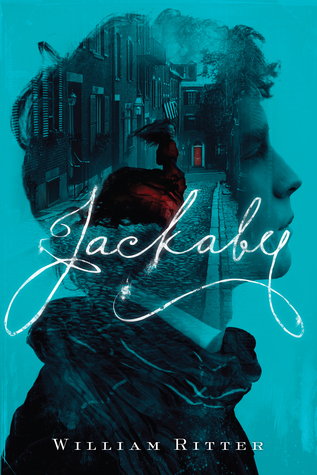
Review: Jackaby


Jackaby by William Ritter


My rating:

"Sherlock meets Doctor Who"? Hmm, sounds appealing, but that wasn't the reason why I decided to pick this book. "Cheeky humor and a dose of the macabre"? Yes, please.

Young Abigail Rook travels to New England with the purpose of having a job and to prove her parents that, even though she's a woman, she can sustain herself. When arrived in there, she meets the mysterious R.F. Jackaby, a scientist of the unexplained, and becomes his assintant.

"Scientist of the unexplained"... Now that I think about it, that sounds slightly familiar to something I have heard before. And its name has an "M" in it...


Yes, that's what it reminded me to: The Monstrumologist. Now, this was what called my attention. I mean, scientist of the unexplained? Innocent assistant who seems to be the only person who understands the monstrum—er, seer? Yes, please.

But there is where the comparison dies, gratefully and unfortunately...

Jackaby promised to be a great mystery/paranormal novel, and, you know, since it was supposed to have "a dose of the macabre," I was expecting all the perturbatively delicious amount of darkness, blood and violence that was present in The Monstrumologist. But it fell short on that. The truth is: Jackaby felt like the innocent, cleaned up version of The Monstrumologist. And by "cleaned up" I mean, washed out of the bloody material.

And now, I'll tell you about the characters...

Abigail Rook, as I said, is a young woman in look for a job. She's a likeable narrator, though I didn't particularly root for her. She can be very impressive sometimes: She seems to be intelligent, observant, and (here's the best part of her) strong. I liked her on the most. Something that didn't convince me a lot about her was the fact that she could swallow the fact that there are ghost and other supernatural creatures so easily; I mean, if you were told there is a pixie living on your head, would you just say "Oh, really?" and start wondering about how many species of fairies are there or would you be like "Umm, okay..."?

But Jackaby is the centre of my attentions. He has the intelligence and deductive abilities of Sherlock Holmes (Let's be silent for a minute. He's amazing. Holmes, I mean), and, based on what I've read about Doctor Who, since I haven't watched that series, the doctor's charisma. He sounds like an appealing character, doesn't he? Well, he is. Not that I loved him, but he was good enough for me to choose him as my favorite character in the novel. Too bad he seemed distant throughout the novel. A point in his favor? He knows chemistry! (But so does Warthrop, and Sherlock. Sorry Mr. Jackaby, but this seat is already taken)

The relationship between Jackaby and Miss Rook felt a bit unrealistic, though. I mean, she met the man, and in less than a day she trusted him completely. I don't know if it is because I don't trust people easily, or if it really is that Abigail trusted him too fast. Futhermore, in less than day she understood him as one would understand someone you nkow since your childhood, not an almost complete stranger. What do you think about that?

The writing in the book was neither great nor bad. What I mean is that it was simple, fast-paced and enjoyable. (Though I really wanted the darkness I was expecting). It was filled, at some points, with humor, which made the story more interesting. One complaint I did have for the writing is that it felt insipid. Abigail narrated the actions without filling it with emotion: It felt the same throughout the book. Imagine that you go to a restaurant, your food is brought, and when you taste it, you discover it has no condiments –no salt, no pepper, no anything. You wouldn't enjoy your food because it doesn't taste like anything. This is what I felt while reading this book. It fitted the time in which it was written, if that may add something good to it.

Another thing that I would have wanted to enjoy more was the storyline. Yes, that's perhaps the most important thing, but I didn't feel very thrilled and immersed in the story. It was predictable and it wasn't as exciting and addictive as I thought it would be. Part of it was the writing, again, because the writing was lacked of sentiment. And the job of Mr. Jackaby didn't sound as terrible as Abigail said it was. Her narration didn't make it sound dreadful. If anyhting, it just made it sound dull –and for me, it is a very intriguing job.

My favorite quote in the book? There you have it:

"Monsters are easy, Miss Rook. They're monsters. But a monster in a suit? That’s basically just a wicked man, and a wicked man is a more dangerous thing by far."


Sorry. I know you know what this reminds me to, but I can't get over that series. Nor I can stop this fangirling. My father says it's lack of social life. Or that I'm already crazy and I have no way back.


Anyway, this was, overall, a good read. Fast-paced, with likeable characters, a paranormal twist and some humour. Given the fact that I'm not usually craving for paranormal/fantasy books (I laugh everytime the words "ghost", "troll" or "fairy" is mentioned. I just can't believe in the existence of those things, not even in books), this was fairly good. I didn't find it ridiculous, and it was a fun read.

Snap to, readers! (Again, sorry. I needed to use that)

P.S.: I'm secretly jealous that this book, with less than a year of publication, is far more popular than The Monstrumologist, which at this moment has 6 years of circulating. I guess I shouldn't be worrying about that (the one who should be jealous is not even me), but I can't help it.


View all my reviews

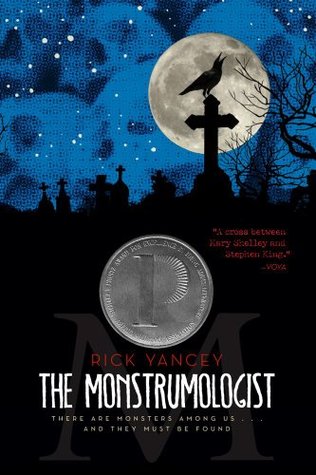
Review: The Monstrumologist


The Monstrumologist by Rick Yancey


My rating:

“These are the secrets I have kept. This is the trust I never betrayed.

But he is dead now and has been for more than forty years, the one who gave me his trust, the one for whom I kept these secrets.

The one who saved me … and the one who cursed me.”


When I first found about this book, I didn't quite want to read it. I was really hesitant to pick it up. I already had not-so-high expectations for it. I mean, monsters? I'm not usually attracted by that kind of things. They don't scare me, and I think they're for children. It didn't sound like the kind of book I might enjoy, but I'm glad I finally made up my mind and gave it a try.

I don't regret at all my decision. I love this book, and have loved it since... What is it? July 2014? See? A short time. This is the kind of thing this series provoke. It's perfect in its own way. In fact, it is perfect for me. I don't have a single complaint for it. The plot, character development, writing... everything is done incredibly well.

So now I'm going to introduce you to the world of The Monstrumologist...

Monstrumology is “the study of life forms generally malevolent to humans and not recognized by science as actual organisms, specifically those considered products of myth and folklore.” The book starts with Mr. Yancey talking to someone who has some papers for him. They belonged to a now dead man who called himself by the name William James Henry. So, the book is supposed to be the diary of this Will Henry, and Rick Yancey's role was as the editor of the book.

The book's setting is in late 19th century New Jerusalem (New England, Massachusetts), and we have Will Henry (at the moment a 12-year-old boy), the orphaned assistant to Dr. Pellinore Warthrop, the monstrumologist, as the narrator of the story. In this case, they are brought a nightmarish creature that feeds himself on humans –the Anthropophagi– and they have to get rid of his pod before it is too late and something really bad happens.

The plot sounds too simple for what the book really is. I mean, intertwined with the hunt for the Anthropophagi, there is some philosophizing about human nature (my Philosophy teacher would kill me for putting the words "human" and "nature" together) in the way, but it does not bore you; or at least, it does not bore me. And also, there is a constant (yet not explicit in this first installment) struggle between good/evil, man/monster, science/superstition, and that makes me love the book even more.

“We are very much like them: indiscriminate killers, ruled by drives little acknowledged and less understood, mindlessly territorial and murderously jealous - the only significant difference being that they have yet to master our expertise in hypocrisy, the gift of our superior intellect that enables us to slaughter one another in droves, more often than not under the auspices of an approving god!”


There is a question that is constantly analyzed throughout the book, and that one is: When does man become the very thing he hunts? I know that at some time, you have to become what you do. For example, if you're a hunter, you have to know how the prey thinks so as to get hold of it...and in this case, if you're a monstrumologist, then I suppose you must be one of the monstrosities you claim to hunt in order to do a good job.

The character development in the book is done in such a good way that you could almost feel them as real people. In fact, you could feel them as real people, since Mr. Yancey, being he the “editor” of Will Henry's diary, said he wanted to know who this Will Henry was, and also, because at the beginning of the book, it is stated that Will Henry had just died –at the age of one-hundred and thirty-one years.

Will Henry, as I said before, is the 12-year-old narrator of the story. He's too young to be doing the kind of job he does with the doctor, yet he does it. He's brave, innocent and loyal. His bravery, also, is realistic, for me. I know no 12-year-old kid would be able to bear the things Will Henry bears, and that makes him even braver. Besides, he's no fearless hero. He sometimes felt weakness inside him and sometimes fear got better of him, but that made him more realistic. He's now an old man writing down his memories, and we know his past was horrible and that he is doomed.

The doctor I mentioned before, Dr. Warthrop, is the other major character of the book. He's clever, serious, ice-cold, terribly egotistical, cruel, proud, easily exasperated, determined and cares for nothing but his work. He can spend many days and nights in his basement (laboratory) working in a case that has been brought to him, and he will not leave it unless his body cannot endure it anymore. He's my favorite character in the book and the entire series. I even admire him and wanna be like him some day--err, I mean, I want to be in love with and determined to my job, just like him. Oh! And I almost forgot: He loves scones.

Jack Kearns (or whatever his name is) would be the perfect definition to what a dangerous man means. If I ever thought Warthrop was inhuman, then wait to know how this man is.

“There is no morality save the morality of the moment.”


Remember the question I said was analyzed throughout the series? Well, this man is a perfect example of a man who is what he hunts. Within his charming smile and his silky blond curls, there is madness. He can throw a convincing lie without flinching, he can use a person as bait for the Anthropophagi without remorse, he can humiliate and frighten the great Pellinore Warthrop, he delights in suffer, he doesn't fear death, etc. It's implied that this man is the famous Jack the Ripper. If that doesn't prove he's mad, then I don't know what does.

One of the things I really liked throughout the series was the Will/Warthrop relationship. As stated before, Will was an orphan. His parents died in a fire, and therefore he had no one else in life, and so, Warthrop "adopts" him as his new assistant. Warthrop is also alone in life: He's not married, has no children and all his family is already dead. Will and Warthrop have just each other. Their relationship is like that of a father and a son, and I loved it. At some point in the novel, Will says he doesn't love the doctor, nonetheless, it's really obvious he does care for him. He's loyal to him and he's always trying to impress him.

As for Warthrop, he also loved Will... in his own way. He's uncapable of showing any emotion besides anger or hatred, but he cares anyway, because he's always trying to protect Will from the dangers they get into, and if something happens to him, he feels guilty and worried.

And the writing is simply mesmerizing. It is filled with many action-packed, fully-detailed scenes... but it is also similar to Mary Shelley's writing. This is perhaps what I admire the most in Rick Yancey's books. I've read two series by him until now, and they both have a marvelous writing. In this case, it's very dark, gothic and also poetical. His descriptions are pretty vivid and horrifying. It has a big amount of blood and gore, which made the book more enjoyable scarier. To add another praise for it, it fitted the time in which it was set.

“Our enemy is fear. Blinding, reason-killing fear. Fear consumes the truth and poisons all the evidence, leading us to false assumptions and irrational conclusions.”


Speaking about scary things... Holy. Mother. Of. God. This book was completely creepy. There were parts that made me feel uncomfortable while reading, and I was never alone at the house. There were some parts that made me look around me just to make sure there was anything wrong in the house, and there were others that made me stand open-mouthed and blank-faced. It was so disturbingly horrifying. I wanted to hug myself tightly most of the time.

This brings me to my next point, that is, why this book is tagged as YA. I don't say it is meant for adults because the hero is far too young and the theme might not call adult readers' attention, but the book is so exceedingly violent and gory that I often wondered if it was really aimed for YA readers. It is obviously not for MG readers, for the previously stated fact that it is far too violent for them, yet the protagonist is the age of most MG's fiction protagonists.

However, it's not only the violence that makes me question this. This book is filled with vocabulary that not everyone is going to understand, for example, names of chemical compounds, parts of the body that you don't hear about in everyday life, words in latin or greek, references to classic figures, etc. Also, it has no romance, which we know is ever-present in YA fiction. Well, I guess this question will remain unanswered and I will bring it to my grave still unanswered.

But the sad part about this series is that almost no one knows it. The 5th Wave has been read by almost every person on Earth, but strangely enough, this book is, in the majority of the cases, not even known to Rick Yancey's readers. I guess my greatest hope is that this book gets some popularity one day.

Anyway, I'll stop here. I feel I've written a Bible, so I'll finish by saying that after this re-read, The Monstrumologist is still my favorite series of all time. In my opinion, it is where Rick Yancey shows us his best. If you're a fan of gothic horror, then this book might be just for you, but don't wait the entire series to be just blood, blood, blood, because it is more than that. This series starts as one thing and ends up being completely another.

So now, what are you waiting for? Go read it! And snap to!

“Yes, my dear child, monsters are real.”


View all my reviews

Thursday, February 26, 2015

Review: Othello


Othello
Othello by William Shakespeare

My rating: 5 of 5 stars


I think I have said many times by now that you don't fully appreciate a book until you read it for a second time. And I was right about this one. I hadn't realised that this book was a favorite of mine when I first read it because I had to read it for classes, and I've noted that books read for academic purposes (and read in high school) are often underestimated. This was mainly why I decided to re-read it. But I'm glad of my decision.

We all know what Othello is about, don't we? I mean, the exaggeratedly jealous man? Well, if you don't know what this book is about, then I don't know in what world you live in.

This is, so far, my favorite Shakespeare tragedy. It's not that I have read all of his works, but this one has remained my favorite for three years now. And it doesn't help that his language is so deliciously beautiful. His writing is what magnetizes me, if not the storyline.

But the plot in this one...I loved it. First, how Iago plans his little things, then how he makes Othello feel jealous, how he later confesses he was lying, and how he remains safe and sound (and villainous) in the end while everyone is grieving the deaths. Okay, I realise I'm not really commenting on the plot itself but on Iago.


Let's all hail Shakespeare for creating such a villain. I just can't. He's my favorite character in the play. Yes, he made Othello fall, but he's so well constructed I could not care. Besides, I found Othello to be annoying most of the time.

Jealousy blinds us. This is not something new, and I know this is not the first time you ever hear this. Jealousy is what brings Othello to his end. Blind panic also makes us do actions that you would regret doing if you were on your right mind. Every emotion in extreme has bad consequences. Even Iago's actions were product of blind feelings, but in this case, we learn, through Othello, about how jealousy can make you a fool. Better to live isolated from the world so you only have to worry about yourself.

Just kidding.

Read this. It's marvelous.


View all my reviews